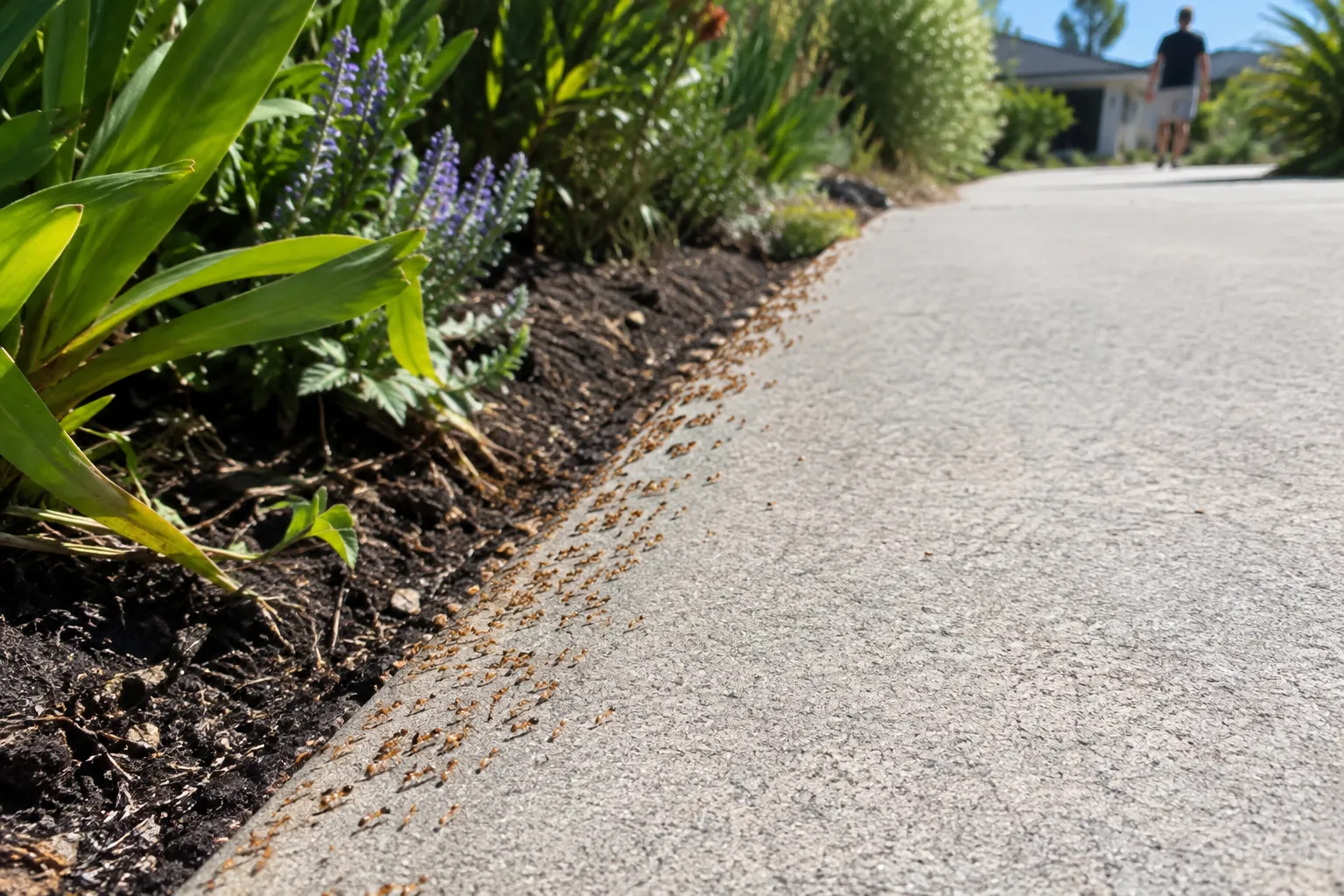
Argentine ants (Linepithema humile) are small, light honey-brown ants that arrived in Auckland in 1990 and are now one of the region's most common household pests. They live in huge linked colonies with many queens, so spraying a trail barely touches them. The official advice is dense, repeated baiting with a protein bait, ideally in spring, and working with neighbours. They're part of the wider picture on our page about ant control in Auckland. Below: how to tell them apart from other ants, why they're such a problem, what the Department of Conservation and Landcare recommend, and when to get a specialist in.
How do you identify Argentine ants?
Argentine ant workers are 2 to 3 mm long, wingless and uniformly light brown, which sets them apart from most New Zealand ants, which are black. They move in wide, close-packed trails, often five or more ants across, along smooth surfaces and up trees and shrubs. Crushed workers have little or no smell.
How to tell them from look-alikes:
- Darwin's ant looks very similar but gives off a strong smell when crushed. Landcare uses this as the quick field test.
- White-footed house ants are black or dark brown with pale feet. Consumer NZ's hand test helps: put your hand on the trail. White-footed ants scatter, Argentine ants walk straight over it.
- Queens are much bigger, dark brown and 10 to 12 mm long, according to Auckland Council. You'll rarely see one unless you disturb a nest.
They nest under wood, stones and leaf piles, and in potted plants. In town, Te Ara notes they forage indoors and swarm over pot plants.
How bad are Argentine ants?
Argentine ants are listed among the world's 100 worst invasive species. In Auckland they invade homes in large numbers, get into food, walls, beds and electrical areas, kill pet birds and lizards, and harm native wildlife. They displace native ants, eat bird eggs, chicks and lizards, and compete with tūī, bellbirds and silvereyes for nectar.
Why they're hard to beat:
- Many queens. Each nest has several queens, so killing one does little.
- Super-colonies. Nests link up and don't fight each other. The Department of Conservation says super-colonies can stretch hundreds of metres.
- Budding. New nests form when queens and workers simply walk off. Landcare says this spreads them about 150 metres a year on average.
- Hitchhiking. They travel between suburbs and towns in potted plants, soil, bark, building materials, vehicles and freight.
They also farm aphids, scale insects and mealybugs for honeydew and protect them, so those plant pests build up in your garden. Auckland Council adds that they kill poultry hatchlings and rob beehives.
Are there Argentine ants in New Zealand?
Yes. Argentine ants were first found in New Zealand in 1990, at Mt Smart Stadium in Auckland, during rehearsals for the Commonwealth Games opening ceremony. They were already established across several hectares, so eradication wasn't attempted. They've since spread across Auckland and to Northland, Waikato, Bay of Plenty, Hawke's Bay, Wellington, Nelson and Christchurch.
Genetic work points to Australia as the most likely source. Landcare estimates they could eventually live in about a fifth of New Zealand, mainly the northern and coastal North Island, where Auckland's warm climate suits them well.
In Auckland, the Regional Pest Management Plan lists the Argentine ant for sustained control across the whole region. You must not breed, distribute, release or sell Argentine ants anywhere in Auckland. That's why checking pot plants before you give them away or move house matters. Auckland Council suggests sitting a pot in water for two minutes to see if ants come out.
How do you get rid of Argentine ants?
You get rid of Argentine ants by baiting densely and repeatedly with a protein-rich fipronil bait across the whole infested area, holding off sprays until the bait has worked, and ideally treating with your neighbours. The Department of Conservation and Landcare both recommend fipronil-based baits. A few bait stations on a window sill won't touch a super-colony.
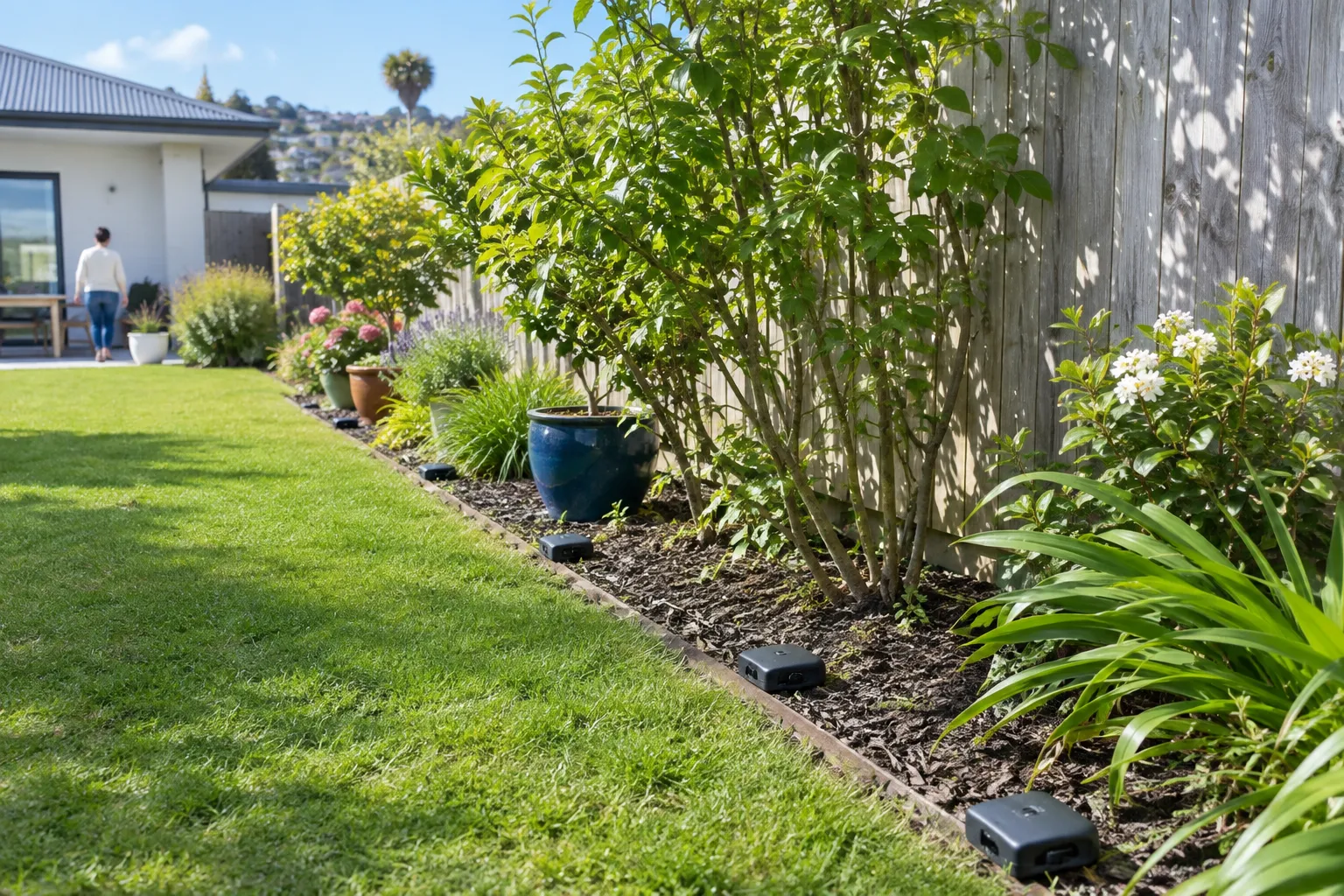
The official advice, in order:
- Bait in spring. Landcare now prefers baiting around early October, before the colony produces new queens.
- Use protein bait. Workers eat mainly sugar, but queens and larvae are fed protein. Consumer NZ quotes a pest controller saying Argentine ants often ignore the sugar baits most shops sell.
- Bait densely. Put many bait stations at the busy spots near trails, along paths, fences, garden borders, rock walls and around the house. Patchy baiting gives a sublethal dose that can split colonies.
- Keep baits fresh. Keep paste and gel baits out of the sun and refresh liquid baits.
- Don't disturb the trails. Let the ants feed.
- Spray last, if at all. Landcare advises waiting at least a week after baiting before using any residual insecticide.
- Repeat. Rebait after six to eight weeks for survivors.
Keep fipronil bait out of drains and gutters and at least 3 metres from waterways. It's very toxic to aquatic life. Landcare also notes that one property's baiting only gives a temporary break if the neighbours have ants too. Our ant bait guide compares the baits on sale.
When should you call a specialist for Argentine ants?
Call a specialist when the trails are still heavy after a few weeks of proper baiting, when ants are inside walls or beds, or when you want the boundary treated with non-repellent products that are for approved handlers only. Large infestations often need a programme with follow-up visits rather than a one-off treatment.
A specialist can also work out whether you really have Argentine ants, or Darwin's or white-footed ants, which need different treatment. If several houses on your street have them, ask whether neighbours can be treated at the same time: both the Department of Conservation and Consumer NZ say coordinated treatment lasts longer. See what ant control costs in Auckland for published prices.
Questions people ask
Do Argentine ants bite?
Argentine ants can bite, but they can't sting and aren't poisonous. Te Ara and the Department of Conservation both confirm this. Landcare notes that if you disturb a nest, ants run up your arms and legs and some people are sensitive to the bites. Wash the area and use a cold pack if it's itchy.
Are Argentine ants an invasive pest?
Yes. Argentine ants are on the list of the world's 100 worst invasive species, and Auckland's Regional Pest Management Plan lists them for sustained control across the region. They aren't a notifiable organism nationally, so you don't need to report them to the Ministry for Primary Industries, but you mustn't spread or sell them.
What is the most common ant in New Zealand?
Te Ara describes the white-footed house ant as New Zealand's most common introduced ant. In Auckland homes, Consumer NZ names the white-footed ant and the Argentine ant as the two main invaders. New Zealand has 38 known ant species, 11 found only here and 27 introduced, mostly from Australia.
When are Argentine ants most active?
They're busiest in the warmer months. Landcare says workers usually forage between about 15 and 30°C, are commonly more active from January to March, and stop in heavy rain. In the upper North Island they can stay active through winter. Nests grow in spring and summer, which is why spring baiting is recommended.
How do Argentine ants spread?
Locally, they spread by budding: queens and workers walk off to start new nests, about 150 metres a year on average. Over longer distances they hitchhike. The Department of Conservation names potted plants as the highest risk, then garden soil, bark, building materials, camping gear and boats. Check plants and gear before you move them.
Sources
- Department of Conservation: Argentine ants
- Manaaki Whenua Landcare Research: Argentine ant fact sheet
- Manaaki Whenua Landcare Research: Biology
- Manaaki Whenua Landcare Research: Impacts
- Manaaki Whenua Landcare Research: Baiting operations
- Auckland Council (Tiaki Tāmaki Makaurau): Argentine ant
- Te Ara: Ants
Last updated